- 971 72 01 19
- 667 55 20 73
- mjgosteo@hotmail.com
- Monday to Friday from 9:00 a.m. to 8:00 p.m.

SPECIFIC BABY TREATMENTS
TREATMENT DURING THE FIRST YEAR AND A HALF OF LIFE
The most common reason for consultation in babies is infant colic, although during the first year and a half of life a few visits are recommended in relation to adaptation to gravity and adaptability after childbirth. In the first year and a half, the human makes the biggest change in life, going from being dependent and immature to having autonomy of movement and being able to feed himself.
Osteopathic treatment from an early age influences the adaptability to problems that arise during growth.
First of all, we explore and treat the consequences of intrauterine life and childbirth. At the end of pregnancy, the baby does not have much space and is very much folded in on itself. At birth, the compressive forces to which the baby is subjected by the passage of the birth canal, initiate a process of unfolding and a release of tension, also boosts the rhythms in the body: the compression and subsequent release is similar to when in water we compress a sponge and release it, it quickly fills up, this serves as an example to explain how all the fluids in the body receive a “push” perfusing the tissues, organs,… for the beginning of life.
The nature and self-regulating capacity of the body makes the body adapt quickly. What we provide with the osteopathic treatment, is that the adaptation occurs earlier, with less tension and less compensations. From this adaptation arises the most frequent symptom of consultation in babies, which is infant colic, although there are other reasons for consultation such as plagiocephaly, congenital torticollis, inconsolable crying, insomnia, otitis, recurrent conjunctivitis…

It is not necessary to have a symptom to treat the baby, the initial tensions of the birth can be checked and balanced to improve the adaptability of the newborn.
The treatment of the newborn is very gentle and aimed to balance its body from intrauterine and birth stresses. It is assessed and treated at the same time, and it is a very pleasant treatment, the child gradually relaxes during the session. On the first day we also teach the parents a routine of massage and gentle exercises that help the symptom to improve and the treatment to be maintained. Generally, after the first visit, parents are seen after one month (except in cases where the child is very irritable, in which case they are seen after 15 days). Two more appointments are normally needed, one month apart, to stabilise the effect of the treatment. After these three sessions, there are some recommended visits during the first year of life: at 6 months (sitting up), at 9-10 months (because of crawling) and at 13-14 months (because of walking).
In the first year and a half of life there is a spectacular change in the human being,the baby goes from being absolutely dependent to walk and “be able to walk and feed himself. With this great change in the structure and maturation of the systems, tensions may arise in the adaptation to gravity or the introduction of new foods, so these appointments are used to assess and treat the adaptation of the body to sitting, crawling (very important phase to be carried out) and walking.
Sitting the child, when he/she is not yet strong enough to sit up, causes postural kyphosis (rounded back) which influences the pressure on the lower thoracic and lumbar vertebrae (which are not yet formed and are a cartilaginous outline), short and poor breathing (with consequent poor ventilation), poor digestion of food, gas,… all as a result of a bad posture that does not benefit the function of the thoracic diaphragm, due to the position. The recommendation, in these cases, is to keep the child more on the floor in positions on the stomach, playing and experimenting on the floor and thus naturally favouring the strengthening of the paravertebral muscles and improving posture in other positions.
Normally we do not recommend stimulation exercises, except in cases of pathology, but when we are talking about these postural tensions, they are easy to change, taking into account the child’s maturity and not wanting to rush them to sit or walk if they are not ready to do so.
Accompaniment
Treating the baby is treating the family. Parents come with their fears, doubts, concerns,…
our experience as mothers and as professionals dedicated to families, has helped us to be able to guide, give information and encourage them to seek their own resources. For new parents many doubts arise and it seems that all but the parents know the answers, we encourage you to reflect and provide information to clarify these doubts.
What do you want for the family that you have formed? How do you want your family to function? Does that phrase that you say to yourself really have to do with you and with what you want?,… these are questions aimed to find your own resources and strength. Doubts arise from our introjects (what we have been told as children and have accepted as ours – and possibly not what we want now in this new family we are forming), doubts also between what we have experienced as children and what we have learnt by reading about parenting for a better education for our children. So, without master formulas, we try to help from common sense and making you contact with your intuition using our skill and technical knowledge of the training we have received. We listen, treat and learn from each child and their history.
After this year and a half, annual check-ups can be done to balance out bumps, falls…, and keep the body balanced and adaptable regarding growth.
INFANT COLIC:
The definition of infant colic is: “baby crying more than 3h per day, more than 3 days per week for more than 3 weeks”.
This definition is very unspecific, as it is difficult to measure or quantify a baby’s crying. Also, this definition reports a symptom, that the child is irritable and not what causes the irritation. It is commonly gas, because the digestive system it´s immature, but there are other causes.
It is useful to take into account some aspects: how does it calm down?, what do you do to stop it crying?, is it an inconsolable and excessive cry that does not calm down with anything?, is there any position in which it improves?, does it occur at a specific time or after feeding, etc.? As a general rule, it usually appears in the first weeks of life and lasts until approximately the third month of life, although in some children this irritability can extend up to the 5th month of life.
If it´s excessive irritability, it is necessary to assess whether there is a cause such as..:
- Reflux
- Pyloric stenosis
- Allergies
- Lactose intolerance
- Aerophagia
- Feeding techniques
- Intestinal atresia: non-development in some part of the gastrointestinal system


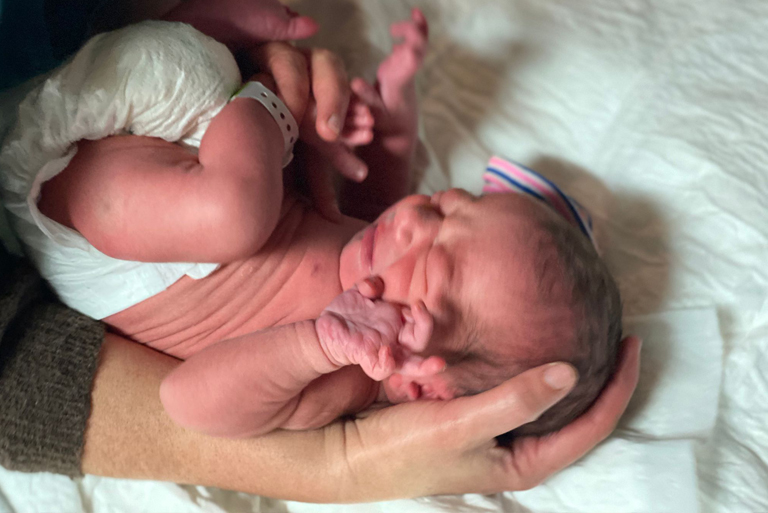
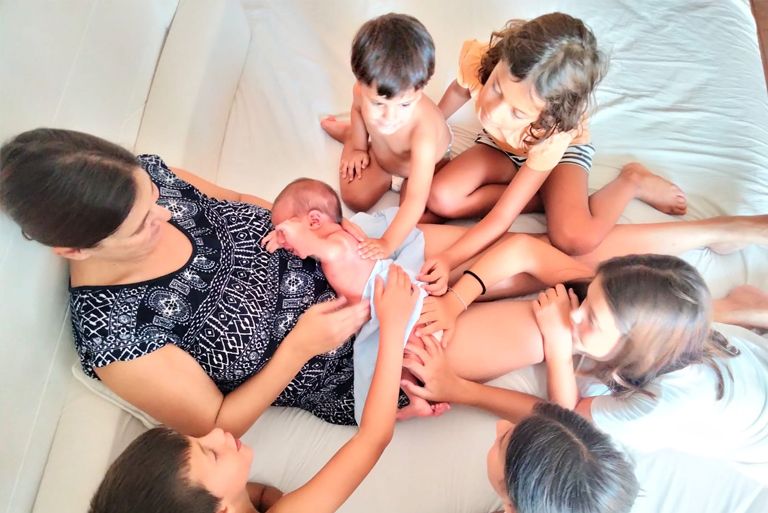


From an osteopathic point of view, the origin of colic (or excessive irritability of the child) may be due to:
- Tensions received during pregnancy, due to the intrauterine position or little space at the end of pregnancy.
- Tensions received during childbirth, depending on the type of birth and the baby's presentation.
- Poor suckling during breastfeeding.
- Possible intolerance to lactose, which is the "sugar" in milk, and the enzyme in the intestine that digests it is "lactase". If there is not enough lactase, as this milk moves down the gastrointestinal tract it ferments and creates gas. The formation and accumulation of this gas is what hurts. The gas attracts water retention in the intestine, increases intestinal peristalsis and as a consequence there can be frequent diarrhoea and explosive poops. What we see in babies is curling up, bringing the knees to the chest and gas.
- Immaturity in the gastrointestinal system: symptoms appear 30-90 minutes after eating. If the problem is higher up, i.e. at the beginning of the gastrointestinal tract, symptoms such as burning or reflux will appear when eating or just after.
Pain travels through the Central Nervous System (CNS) and in infants these neurological connections are still poor and not fully myelinated, the transmission of pain is therefore slow. The autonomic and enteric SN are closely related in infants. The child may show intestinal symptoms when there are no intestinal problems, so it is diagnosed as colic, but it may be due to “stress”, pain elsewhere and is an indication of irritability, that the child is not “calm”.
With osteopathy, we balance tensions that can occur from pregnancy to birth and specially in instrumental births or caesarean sections. Especially in the last trimester, the folding and the adaptation to the little space at the womb, causes compressed and bent postures, this is easy to assess and treat by an osteopath specialised in babies. Vaginal birth creates a compression and expansion of the structures, that is very useful for adaptation to life and for the first breath, it is a great impulse that reaches all the tissues, nevertheless, certain tensions may remain depending on how the latest stage of delivery and the birth have been. Instrumented deliveries and c-sections can leave a greater mark, in terms of stress that are assessed in the newborn. Nature is wise and has made the human body highly adaptable, osteopathy provides a sooner adaptability to the tensions so the baby has less irritability and is more relaxed. Very gentle techniques are used and normally 3-4 sessions, one per month, are sufficient.
REFLUX:
85% of reflux in infants begins in the 1st week. The acid from the secretions goes up into the oesophagus. There is no real sphincter in the stomach, there is a ligament around the stomach that acts as a sphincter and helps to keep it closed together with positive abdominal pressure.
Among the causes that can provoke reflux are: tension in the diaphragm, unbalance of pressure between the thorax and abdomen (due to gases),…, this conditions cause this ligament to fail and reflux occurs. Reflux can also be caused by immaturity of the structures. As a symptom, vomiting does not necessarily have to be present.
The most frequent symptoms are discomfort and discomfort just after eating, the baby seems to be more comfortable upright, is hungry but often detaches from the breast, cries inconsolably, a lot of salivation, which is the body’s way of compensating for the acidity. They also have more mucus due to the reaction of the lymphatic system in the oesophagus.
On a medical level, antacids are sometimes administered, which have few side effects. After a week of ingestion, changes can be noticed.
With osteopathy, we work on the neurological, visceral and musculoskeletal connections that are related to the anterior part of the thorax and neck. All structures are mechanically and physiologically related, especially in a baby. We work globally, supporting both the baby and the family in the management of the symptom.

